Blippi

Blippi

· YouTube

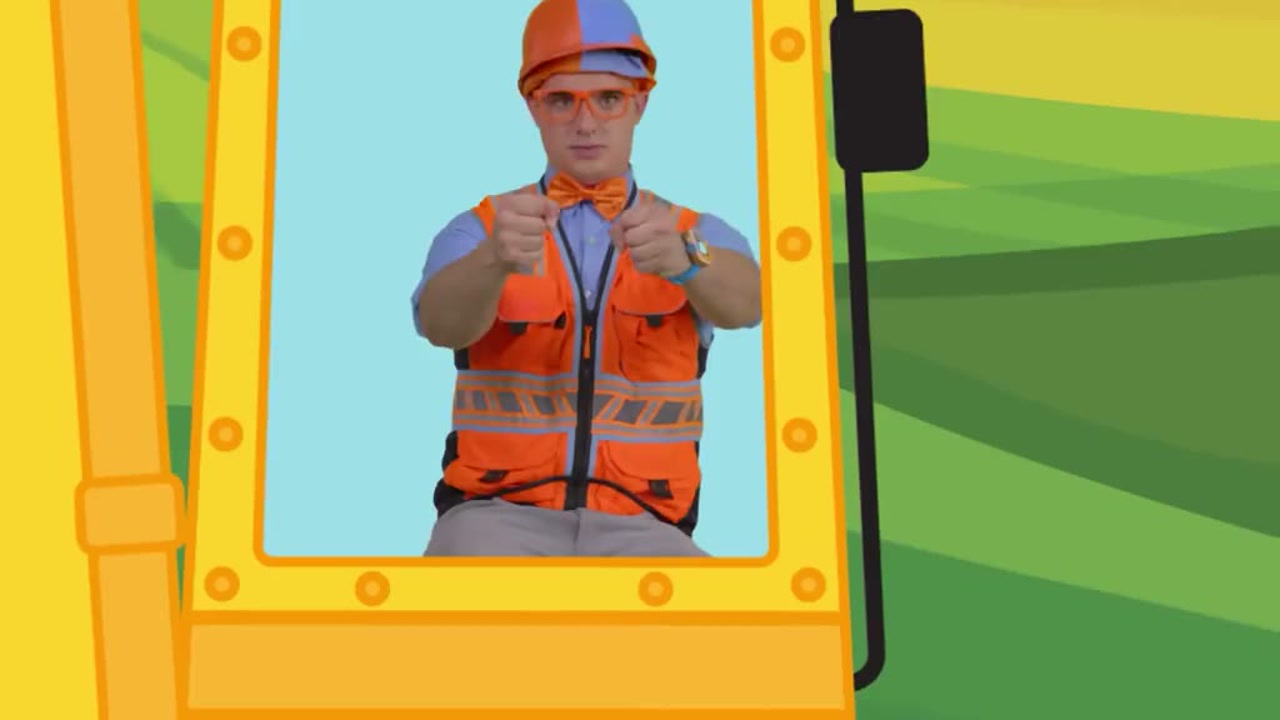
A grown-up in an orange cap visits a real machine or a real place. He asks your child questions as he goes.

A grown-up in an orange cap visits a real machine or a real place. He asks your child questions as he goes.

It is filmed rather than drawn. One presenter talks straight to camera for most of it, going somewhere real and naming what is there. He asks questions out loud and leaves room for an answer, and some episodes ask for a hand movement or a stand-up too. The places change every time and so do the people in them. Some episodes are a song and the rest move from one thing to the next. The tone stays bright the whole way and the pace sits in the middle.

It is filmed rather than drawn. One presenter talks straight to camera for most of it, going somewhere real and naming what is there. He asks questions out loud and leaves room for an answer, and some episodes ask for a hand movement or a stand-up too. The places change every time and so do the people in them. Some episodes are a song and the rest move from one thing to the next. The tone stays bright the whole way and the pace sits in the middle.

Analyzed by KidSight

WHAT IT MEANS AT EACH AGE

0–2

A little young

Just over half read as acceptable at this age and the rest fall away. The talking is direct and the pictures are of real things, which is easier to hold at two than a story is. What sits above them is the length and the questions, since a two-year-old is not answering yet. They will watch the digger and miss the point being made about it.

3–5

Good fit

Four is the whole audience. Every episode is a good fit at age three to five, with none falling away. The questions land at exactly this age, where a child will shout an answer at the screen and mean it. The subjects are the ones a four-year-old already asks about, machines and animals and how people do their jobs. It plays better with you sitting there, since most episodes lean on someone answering back.

6–8

A little old

By seven the questions are too easy. Almost every episode reads as acceptable rather than a fit, and only a rare one still lands properly. Nothing in it is wrong at this age. A seven-year-old has known what a digger does for years, so the naming that carries it at four is a slower watch here. The real places still hold some interest.

9–10

Too old

There is nothing here at nine. Almost every episode reads as poor at this age, and that is about fit rather than anything being wrong with it. The whole approach is built on naming things a nine-year-old named years ago. They will not stay, and there is no reason to ask them to.

WHAT IT’S ABOUT

Trucks and diggers

Jobs and helpers

How machines work

WHAT IT TEACHES

How things work

Nature and animals

New words

WHAT TO KNOW

Nothing flagged

SUMMARY

How things work is the strongest thing Blippi builds, coming through on about two thirds of the episodes. Nature and animals and new words sit behind it. What separates it is that it asks. Almost every episode puts a question to your child and leaves room for the answer. Most of them play better with an adult in the room to answer back. That is why it fits so exactly at age four and runs out by age seven. The questions suit a child who is still naming things.

Stop guessing. Start knowing.

Build your kid’s lineup now.

Background Image

Stop guessing. Start knowing.

Build your kid’s lineup now.

Background Image

Stop guessing. Start knowing.

Build your kid’s lineup now.

Background Image