Screen Time Science
What the AAP Actually Says About Screen Time (And What Most Parents Get Wrong)
You've probably heard the rule: no screens before age 2. It's repeated in pediatrician offices, parenting Facebook groups, and by that one friend who somehow manages to keep their toddler entertained with wooden blocks for eight hours straight.
But here's the thing — that's not actually what the American Academy of Pediatrics says anymore. And the gap between what parents think the guidelines say and what they actually say is creating a lot of unnecessary guilt.
Let's clear it up.
The Real AAP Guidelines (Updated)
The AAP's current position on screen time is more nuanced than most parents realize. Here's the actual breakdown:
Under 18 months: Avoid screen media other than video chatting. This is the one area where the guidelines are genuinely strict. FaceTime with grandma? Fine. YouTube videos? They're saying hold off.
18 to 24 months: If you want to introduce digital media, choose high-quality programming and watch it with your child. The key words here are "high-quality" and "with your child." Not all screens are created equal, and a parent sitting next to their kid explaining what's happening on screen changes the experience completely.
2 to 5 years: Limit screen use to one hour per day of high-quality programs. Again — quality matters more than the clock. And parents should co-view when possible to help kids understand what they're seeing.
6 and older: Place consistent limits on screen time and make sure it doesn't interfere with sleep, physical activity, and other healthy behaviors. Notice they stopped giving a specific number of minutes. That's intentional.
What Most Parents Get Wrong
"No screens before 2" is treated as law
The AAP's actual language for 18-24 months is permissive — they say "if you want to introduce" media, here's how. That's not a ban. That's guidance for doing it well. Yet most parents either think all screens before 2 are damaging (and feel crushing guilt when they inevitably use them) or dismiss the guidelines entirely because the "rule" feels impossible to follow.
Neither reaction is helpful.
Time matters less than content
This is the biggest shift in pediatric thinking over the past decade, and it hasn't fully reached most parents yet. The AAP and organizations like NAEYC and Zero to Three have all moved toward emphasizing content quality over screen time quantity.
A 20-minute episode of a slow-paced, educational show where a character asks your child questions and waits for responses is a fundamentally different experience than 20 minutes of rapid-cut, overstimulating content with no narrative structure. Same amount of time. Completely different impact on your kid's brain.
The research backs this up. Studies consistently show that well-designed educational content can support vocabulary development, social-emotional skills, and early literacy — especially when a caregiver is involved. Meanwhile, fast-paced, high-stimulation content has been linked to attention difficulties and poorer executive function in young children.
Co-viewing is doing more than you think
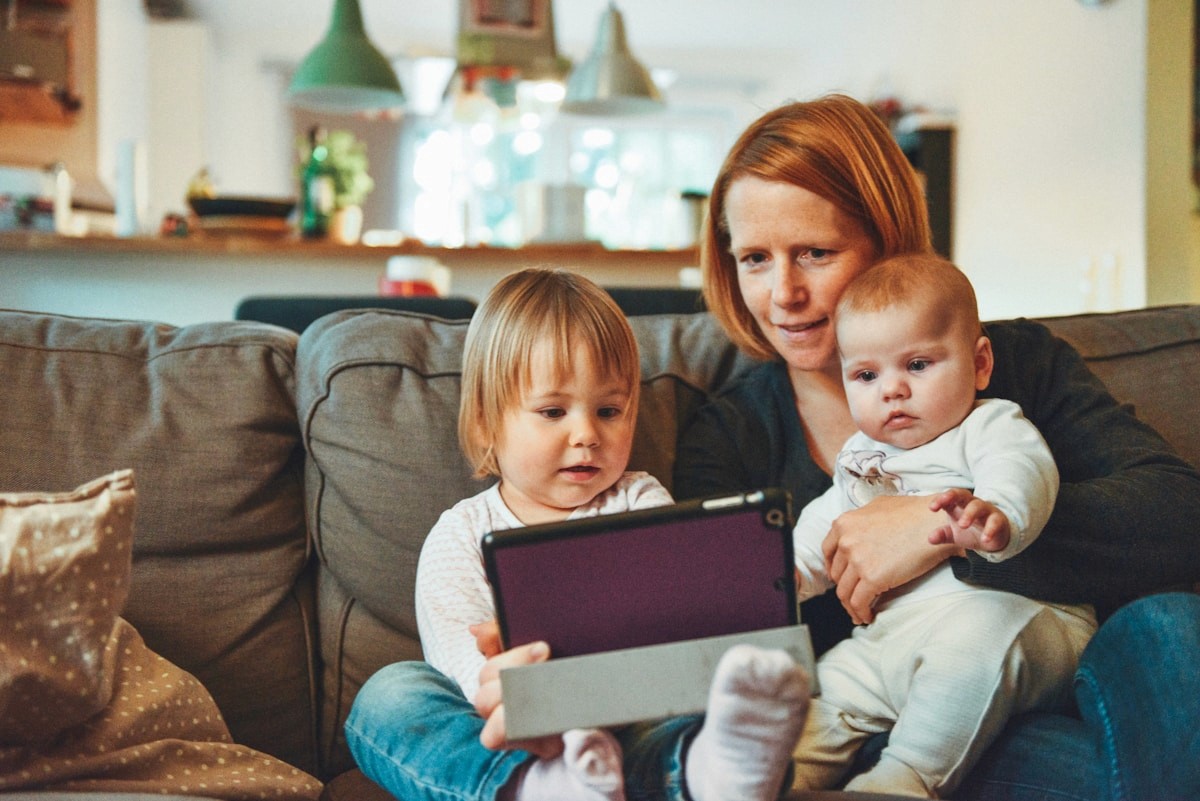
The AAP keeps emphasizing co-viewing, and most parents interpret this as "sit next to your kid while they watch." That's part of it, but the real value comes from interaction. Asking questions about what's happening. Pointing out letters or colors. Connecting what's on screen to real life. That active engagement turns passive watching into something much closer to a learning experience.
You don't have to do it every single time. But when you can, it matters.
The Part Nobody Talks About
Here's what the AAP guidelines don't fully address: not all content that looks educational actually is.
A YouTube video can have bright colors, ABCs in the title, and a cheerful narrator — and still be terrible for your child's development. Fast cuts, layered audio tracks, and no pauses for processing can overstimulate developing attention systems even when the "topic" is educational.
This is the gap that most parents feel but can't quite articulate. You know some shows feel better than others. You notice your kid is calmer after certain videos and wired after others. That instinct is correct — and it's backed by the same developmental science the AAP uses.
The problem is that evaluating this for every individual video your kid watches is nearly impossible to do manually. That's actually why we built KidSight — to give parents a way to check whether a specific video is genuinely good for their child's age, not just safe or labeled "educational."
What to Actually Do With This Information
Forget the guilt. Here's what the research supports:
Before 18 months: Video chat is fine. If you occasionally need to put something on for 10 minutes while you take a shower, your child is not ruined. But generally, this age group gets the most from real-world interaction.
18 months to 5 years: Focus on what they're watching, not just how long. Choose shows with slower pacing, clear educational intent, and characters that model good behavior. Watch with your kid when you can and talk about what you're seeing.
All ages: Pay attention to how your child acts after watching. Are they calm and engaged, or agitated and unfocused? That post-viewing behavior is one of the best indicators of whether the content was appropriate for them.
The AAP's guidelines aren't about perfection. They're about being intentional. And being intentional starts with understanding what actually matters — which is less about the number of minutes and more about what fills them.
More from KidSight
Research-backed insights on screen time, child development, and making better media choices for your kids.