Art for Kids Hub

Art for Kids Hub

· YouTube

Step-by-step drawing, one line at a time. It only works with paper and a pencil in hand.

Step-by-step drawing, one line at a time. It only works with paper and a pencil in hand.

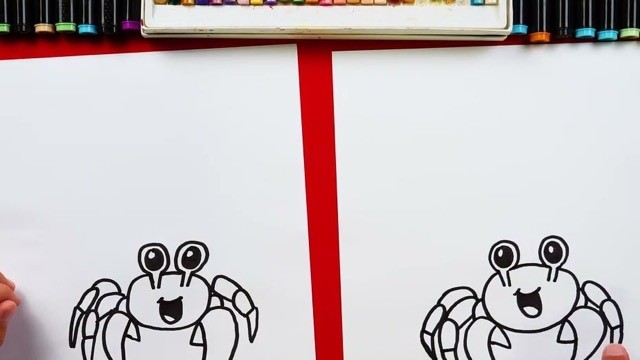
Rob sits at a table with a marker and a sheet of paper, talking straight to the camera. Each episode is one drawing, built up a line at a time, with a pause after every step so a child can catch up. Sometimes Jack or Hadley draws alongside him and they compare pages at the end. The subjects are the things a child would ask to draw. The instructions are spoken, so there is nothing to read. Nothing is animated. It is a real table, real hands, and a page that fills up as it goes.

Rob sits at a table with a marker and a sheet of paper, talking straight to the camera. Each episode is one drawing, built up a line at a time, with a pause after every step so a child can catch up. Sometimes Jack or Hadley draws alongside him and they compare pages at the end. The subjects are the things a child would ask to draw. The instructions are spoken, so there is nothing to read. Nothing is animated. It is a real table, real hands, and a page that fills up as it goes.

Analyzed by KidSight

WHAT IT MEANS AT EACH AGE

0–2

Too young

Every episode reads as poor at this age, and the reason is the pencil. A two-year-old cannot hold one steadily enough to follow a line, so the part that makes the whole thing work is out of reach. The talking runs at ordinary conversational speed, with no slowing down and no repeating. Left to watch instead, a two-year-old gets a grown-up's hand moving on paper for the better part of ten minutes. There is nothing here for them to do.

3–5

A little young

Nothing here is a problem at age four, and close to half the episodes come through as a genuine fit. What holds it back is what the hand can do. The steps arrive at a steady clip. Each one is a shape to get onto the page: a curve, a corner, a line that meets another line. A four-year-old can stay with it if you pause it often and sit alongside. On their own, they fall behind the hand on screen and the page stops matching.

6–8

Good fit

This is the age it fits. Every episode comes through cleanly here. A seven-year-old has the hand control each step needs and the patience to stay with one drawing for the better part of ten minutes. The instructions are spoken plainly and in order, so there is nothing to read and nothing to decode. A seven-year-old can get the paper out, press play, and reach the end of a drawing without an adult sitting there.

9–10

Good fit

It still lands at age nine. Most episodes read as a full fit here and not one falls away. What carries it up this far is that the steps are actual drawing method. A shape gets built out of simple parts, then worked back into. Nothing is filled in on a page that is already drawn. The subjects sit at the softer end of what a nine-year-old picks for themselves. A few read younger than the drawing inside them does.

WHAT IT’S ABOUT

Drawing

Wild animals

Toys

WHAT IT TEACHES

Facts worth keeping

Warmth between people

Colours and shapes

WHAT TO KNOW

A paid membership pitch near the start

SUMMARY

Every episode reads as a good fit at age seven. It holds at age nine as well, with most still a full fit and not one falling away. The format is why. There is no story to grow out of, only a page to finish. The same steps hold up at age seven and again at age nine. What it trades for that range is everything a story gives. There is no plot and no characters to follow. Nothing much is being felt. And for a child who does not want to draw, there is nothing here at all. The other thing to flag is the pitch. Many episodes open with a short plug for the channel's paid app, briefly and without pressure, but often enough that you will hear it.

Stop guessing. Start knowing.

Build your kid’s lineup now.

Background Image

Stop guessing. Start knowing.

Build your kid’s lineup now.

Background Image

Stop guessing. Start knowing.

Build your kid’s lineup now.

Background Image